Turn rich beef ribs into bold, deli-style pastrami with a deep cure, peppery crust, and slow smoke. Perfect for slicing thick and serving hot off the board.
Ingredients
Beef Ribs (plate ribs preferred)
1/3 cup Kosher Salt
3 tbsp Pickling Spice
2 tbsp Pink Curing Salt (Prague Powder #1)
1 gallon Water (or enough to fully cover ribs)
For the Pastrami Rub (after brine)
4 tbsp fresh coarsely ground black pepper
2 tbsp coriander powder
1 tsp mustard powder
1 tbsp paprika
2 tsp garlic powder
2 tsp onion powder
Instructions
1️⃣ Brine
In a large container, combine water, kosher salt, pickling spice, and pink curing salt. Stir until fully dissolved.
Place ribs in a brining bag or food-safe container.
Pour brine over ribs until fully submerged.
Seal and refrigerate for 7–10 days, flipping once daily to ensure even curing.
2️⃣ Rinse & Dry
Remove ribs from brine.
Rinse thoroughly under cold water to remove excess cure.
Pat completely dry with paper towels.
Place uncovered in the fridge for 12–24 hours to develop a tacky surface (pellicle) for better smoke adhesion (optional but recommended).
3️⃣ Season
Lightly coat ribs with a binder (mustard or beef tallow).
Generously apply pastrami rub, pressing it firmly onto all sides.
4️⃣ Smoke
Preheat smoker to 250°F.
Use oak, hickory, or cherry wood.
Smoke ribs until internal temperature reaches 165–170°F (about 4–5 hours depending on size).
5️⃣ Wrap & Finish
Wrap ribs tightly in butcher paper or foil.
Return to smoker and cook until internal temperature reaches 200–203°F and ribs are probe tender.
6️⃣ Rest & Slice
Remove from smoker and rest wrapped for at least 1 hour.
Slice between bones or carve across the grain.
Serve hot and enjoy that smoky, peppery pastrami flavor.
🔥 Pro Tip: Chill overnight after cooking for ultra-clean slices, then reheat gently before serving for true deli-style pastrami ribs.
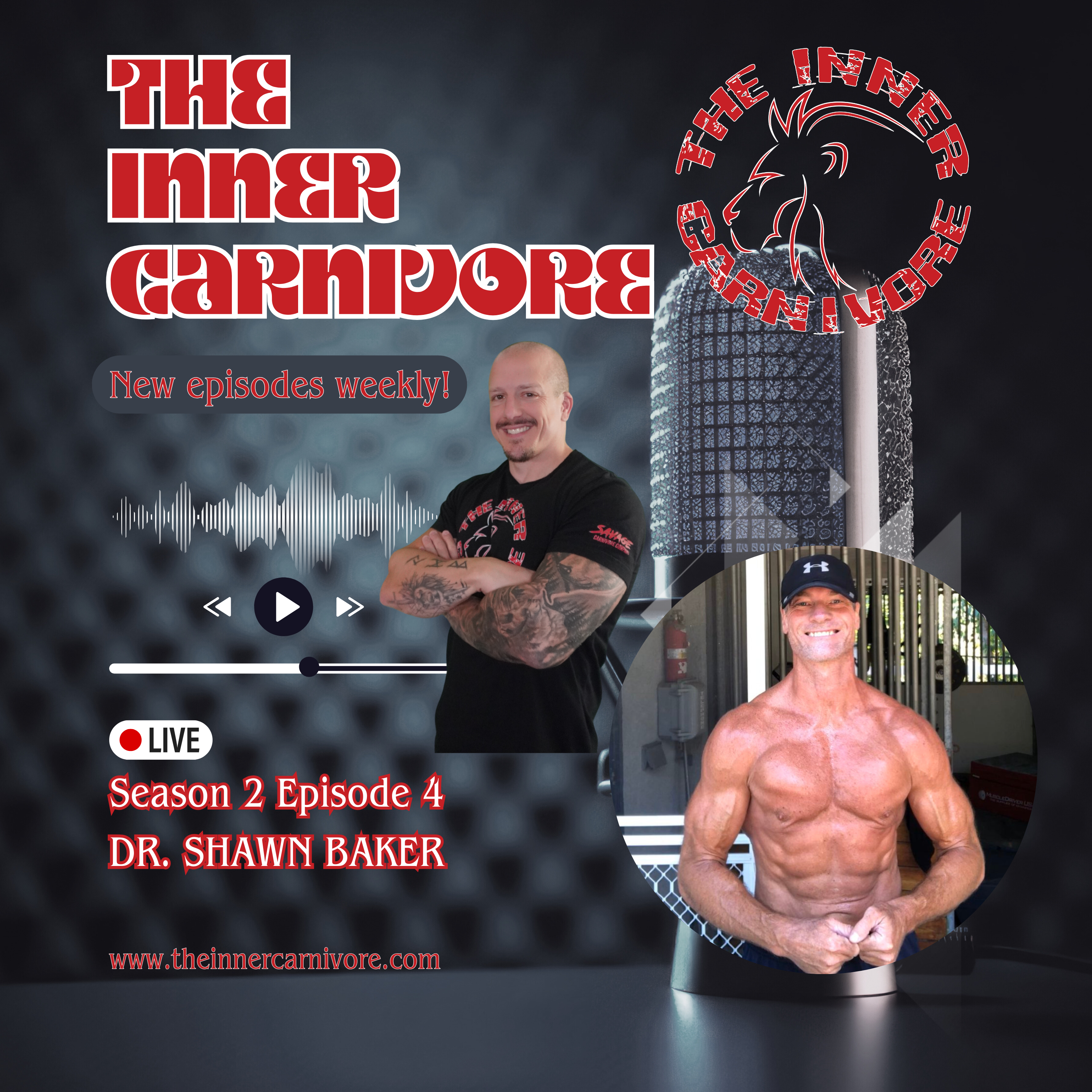
The Inner Carnivore Podcast Season 2 Episode 4 – @shawnbakermd – Celebrating World Carnivore Month In this compelling episode of The Inner Carnivore Podcast, host Carnivore JT welcomes Dr. Shawn Baker, a leading voice in the carnivore diet movement and co-founder of Revero. With decades of experience as an orthopedic surgeon, elite athlete, and dietary advocate, Dr. Baker shares his profound insights into the transformative power of animal-based nutrition. Tune in as Dr. Baker discusses his journey from traditional medicine to challenging the status quo with a meat-centric lifestyle. Together, he and Carnivore JT explore the health benefits, common misconceptions, and real-world applications of the carnivore diet. Whether you’re a seasoned meat enthusiast or just curious about cutting-edge nutritional strategies, this episode is packed with actionable advice and inspiring anecdotes. Discover how Dr. Baker’s work is revolutionizing the way we think about food, performance, and health optimization in the modern world. https://www.revero.com/ / shawnbaker1967 https://x.com/SBakerMD / @shawnbakermd
Are you struggling to make keto or carnivore easy, or to lose weight?
Maybe you’ve hit a plateau?
That’s why I’m so excited to tell you about the Keto Diet Summit! The goal for this summit is different than most.
The goal is to help you unlock the secrets to keto and carnivore success to lose weight and regain health.
We all want that right?
For 3 days, September 15-17th, Abby from KetoDietSummit.com is bringing you presentations from 10+ keto and carnivore industry experts who have found ways to make keto and carnivore easier, while losing weight and regaining your health! You’ll hear about everything from how to increase your daily protein to food addiction, how to stay committed to your diet, and many more.
They’re featuring some pretty big names, including:
Carnivore JT
Craig Emmerich
Maria Emmerich
Joe & Rachel: 2 Krazy Ketos
Courtney Luna
And a whole lot more!
The best part? It’s totally free!
There’s more I’d love to tell you about this summit, but I’ll let you check out all the details for yourself.
Embarking on a journey of self-improvement in early 2022, I found myself dissatisfied with my physical state (I had what some might call a “dad bod” to the extreme). Seeking a reset, I turned to a diet I had used in the past, the Whole 30. However, this time, I decided to extend it to 90 days, dubbing it the “Whole 90.” Little did I know, the revelations that awaited me would be startling.
Over the course of those 90 days, I managed to shed 15 pounds and bring my weight back under 200 pounds, a milestone I hadn’t reached in over five years. But here’s the disturbing part: I felt terrible. I experienced more bloating and gastrointestinal issues than I had when I indulged in whatever food I pleased, snacked without restraint, and enjoyed alcoholic beverages.
My diet during this period consisted solely of “Whole Foods”: chicken, ground turkey, vegetables, and fruits were my staples. No alcohol, no cheating, no processed foods. While I did lose weight, I was frustrated to find that my body composition remained disappointingly similar to where I had started. I felt uncomfortable in my own skin and out of shape.
Throughout the entire diet, I was miserable, yet I persevered. However, once the 90 days were up, I couldn’t help but resent everything that was deemed “healthy.” I quickly fell back into my old habits, consuming whatever I desired. As a result, a few months later, I found myself back at the same weight I had started with.
That was the turning point for me. I made a firm decision to bid farewell to my dad bod. I no longer felt content in my own skin, a feeling I had never truly experienced before. It all began when my wife shared a profile with me, introducing me to CarnivoreMD, with the caveat that it might be a little unconventional.
Intrigued, I decided to give it a shot. I abandoned vegetables, bid farewell to chicken (“Years of Academy Training, WASTED!”), and eliminated seed oils from my diet. Suddenly, I found myself rediscovering the joy of food. The first noticeable change was that, for the first time in years, I no longer felt bloated immediately after eating.
To my surprise, the persistent “protein farts” that had plagued me for years vanished. As time went on, I began shedding weight. My head acne cleared up. Muscles reemerged, and I started to feel like my old self again. Four months into my leniently practiced Carnivore Diet, I made the bold decision to fully commit.
What followed doesn’t require much explanation; the before and after pictures speak for themselves. At the age of 36, with two young children at home, I achieved the physique I had when I was single, in my 20s, and working at a gym where I could fit in a weightlifting session during my lunch break.
While fitness influencers often claim that “nothing tastes as good as skinny feels,” I beg to differ. Ribeye, my friends, is an absolute delicious!
According to the United States Department of Agriculture (USDA), the global production of soybean oil in 2020/2021 was approximately 61.4 million metric tons. The largest producers of soybean oil are the United States, Brazil, Argentina, China, and India. The demand for soybean oil has been steadily increasing in recent years due to its versatility and use in a wide range of applications, including cooking oil, biodiesel fuel, animal feed, and industrial products.
The global market size for soybean oil was estimated at around 46.4 billion U.S. dollars in 2020, with a forecasted increase to 56.6 billion U.S. dollars by 2027.
Soybean oil is typically extracted through a process known as solvent extraction. Here are the basic steps:
Cleaning and preparation: The soybeans are cleaned and any foreign materials or impurities are removed.
The cleaning and preparation stage of soybean oil extraction involves several steps to remove any impurities or foreign materials from the soybeans. Here are some of the typical steps involved:
Screening: The soybeans are screened to remove any large debris or foreign materials, such as stones or twigs.
Aspiration: The soybeans are then passed through an aspirator, which uses airflow to remove lighter-weight materials, such as dust and chaff.
Magnetic separation: A magnetic separator is used to remove any metal particles from the soybeans.
Hulling: The soybeans are then hulled to remove the outer shells or hulls, which are not used in the extraction process.
Conditioning: The soybeans are conditioned by heating them to a specific temperature and moisture content to help loosen the oil for extraction.
Overall, the cleaning and preparation stage is crucial to ensure the quality and purity of the soybeans and the resulting soybean oil. Any foreign materials or impurities that are not removed can negatively affect the extraction process and the quality of the final product.
Crushing: The cleaned soybeans are then crushed into small pieces to make it easier to extract the oil.
The crushing stage in soybean oil extraction involves breaking the soybeans into small pieces to increase the surface area available for the solvent to penetrate during the extraction process. Here are some of the typical steps involved in the crushing stage:
Cleaning: Before the soybeans can be crushed, they must be cleaned to remove any impurities, such as stones or dirt.
Cracking: The soybeans are first cracked into smaller pieces using a mechanical or pneumatic device called a cracker. This breaks the soybeans into smaller pieces while preserving the integrity of the oilseed.
Dehulling: The soybeans are then sent through a dehuller, which removes the hulls from the soybean pieces. The hulls are not used in the extraction process and are typically sold for use in animal feed.
Grinding: The soybean pieces are then ground into a coarse meal using a roller mill or hammer mill. This breaks the meal into even smaller pieces and helps to further expose the oil for extraction.
Overall, the crushing stage is an important part of the soybean oil extraction process, as it increases the surface area available for solvent penetration and extraction, which helps to maximize the yield of oil from the soybeans.
Flaking: The crushed soybeans are then flattened into thin flakes, which increases the surface area for the extraction process.
The flaking stage in soybean oil extraction involves flattening the soybean meal into thin flakes to further increase the surface area for the solvent to penetrate during the extraction process. Here are some of the typical steps involved in the flaking stage:
Conditioning: Before the soybean meal can be flaked, it is conditioned by adding steam to the meal to increase its moisture content. This makes the meal more pliable and easier to flatten.
Flaking: The conditioned soybean meal is then sent through a roller mill, which flattens the meal into thin flakes. The flakes are typically about 0.25 to 0.30 millimeters in thickness.
Drying: The soybean flakes are then dried to reduce their moisture content to a level suitable for the extraction process.
Overall, the flaking stage is an important part of the soybean oil extraction process, as it increases the surface area available for solvent penetration and extraction, which helps to maximize the yield of oil from the soybeans.
Extraction: The soybean flakes are then placed in a solvent, typically hexane, which separates the oil from the rest of the material. This process is called leaching.
The extraction stage in soybean oil extraction involves separating the oil from the soybean flakes using a solvent. Here are some of the typical steps involved in the extraction stage:
Solvent addition: The soybean flakes are placed in a large extractor and a solvent, typically hexane, is added to the extractor. The solvent dissolves the oil from the flakes and forms a solution.
Counter-current extraction: The solvent is then circulated through the extractor in a counter-current fashion, which means that the solvent flows in the opposite direction to the soybean flakes. This helps to maximize the extraction efficiency by allowing the solvent to come into contact with fresh soybean flakes and minimize the loss of solvent.
Desolventizing: After the extraction process is complete, the solvent-oil mixture is drained from the extractor and sent to a desolventizer. The desolventizer uses steam to remove the solvent from the oil, leaving behind crude soybean oil.
Solvent recovery: The solvent that has been removed from the oil is then recovered using a distillation process. The recovered solvent can be reused in the extraction process.
Overall, the extraction stage is a critical step in soybean oil extraction, as it allows for the efficient separation of the oil from the soybean flakes. The use of a solvent helps to maximize the yield of oil from the soybeans, and the counter-current extraction process helps to minimize the loss of solvent.
Distillation: The solvent is then removed from the oil using a distillation process, which separates the solvent from the oil.
The distillation stage in soybean oil extraction involves separating the solvent from the crude soybean oil using a distillation process. Here are some of the typical steps involved in the distillation stage:
Stripping: The crude soybean oil and solvent mixture is first heated to a high temperature in a stripping column. This causes the solvent to evaporate and rise to the top of the column.
Condensation: The solvent vapors are then cooled and condensed back into a liquid form using a condenser. The liquid solvent is collected and sent back to the extraction process for reuse.
Distillation: The remaining crude soybean oil is then further purified through a distillation process, which involves heating the oil in a second column. This causes the different components of the oil, such as fatty acids and triglycerides, to vaporize at different temperatures and rise to different levels in the column.
Fractionation: The vaporized components are then separated into different fractions, which are collected and processed separately. This allows for the production of different grades of soybean oil with different characteristics and properties.
Overall, the distillation stage is an important part of the soybean oil extraction process, as it allows for the efficient separation of the solvent from the crude oil and further purification of the oil. This results in a high-quality soybean oil that can be used for a variety of different applications.
Refining: The crude soybean oil is then refined to remove any impurities or unwanted substances, such as free fatty acids, phospholipids, pigments, and other impurities.
The refining stage in soybean oil extraction involves further purification and processing of the crude soybean oil to produce a high-quality, edible oil that is suitable for human consumption. Here are some of the typical steps involved in the refining stage:
Degumming: The crude soybean oil is first treated with water to remove any impurities, such as phospholipids and proteins, that can cause the oil to spoil or become cloudy. This process is known as degumming.
Neutralization: The degummed soybean oil is then treated with an alkaline solution, typically sodium hydroxide, to neutralize any free fatty acids present in the oil. This process is known as neutralization.
Bleaching: The neutralized soybean oil is then treated with bleaching earth, a natural clay material that helps to remove any remaining impurities and color from the oil.
Deodorization: The bleached soybean oil is then heated to a high temperature in a vacuum chamber to remove any volatile compounds that can cause the oil to have an off-flavor or odor. This process is known as deodorization.
Fractionation: The final step in soybean oil refining is often fractionation, which involves separating the oil into different fractions based on their melting points. This allows for the production of different grades of soybean oil with different characteristics and properties.
Overall, the refining stage is a critical part of the soybean oil extraction process, as it allows for the production of a high-quality, edible oil that is suitable for human consumption. The different refining steps help to remove impurities and improve the flavor, color, and stability of the oil.
Deodorization: Finally, the oil is deodorized to remove any residual odor or taste.
The deodorization phase in soybean oil refining involves heating the oil to a high temperature under vacuum conditions to remove any volatile compounds that can cause off-flavors or odors in the oil. Here are some of the typical steps involved in the deodorization phase:
Preheating: The oil is first preheated to a temperature of around 180-220°C to remove any moisture and reduce the viscosity of the oil.
Deodorization: The preheated oil is then heated to a temperature of around 240-270°C in a vacuum chamber. The vacuum conditions help to lower the boiling point of the volatile compounds, allowing them to be removed from the oil without causing any significant chemical changes to the oil. The oil is typically held at this temperature for around 30 minutes to 1 hour.
Cooling: The deodorized oil is then cooled down to a temperature of around 100-120°C using a heat exchanger.
Filtration: The cooled oil is then filtered to remove any remaining impurities and particles.
The deodorization phase is a critical part of soybean oil refining, as it helps to remove any unwanted flavors or odors from the oil, making it more suitable for use in food products. The high temperature and vacuum conditions help to remove volatile compounds, such as aldehydes, ketones, and acids, that can contribute to off-flavors and odors in the oil. Overall, the deodorization phase is an important step in producing a high-quality, edible soybean oil.
After these steps, the resulting soybean oil can be used for a variety of purposes, such as cooking, baking, or as an ingredient in food products.